
· Dogs, Yard, Poo Patrol Blog
Dog Poop and Kids: The Health Risks Every Parent Should Know
It is July in Eastern Iowa, which means the kids are home, the sprinkler is on, and your backyard is doubling as a daycare, a soccer field, and a picnic spot. That is exactly how it should be. But if a dog also lives in that yard, there is one health conversation every parent should have with themselves once a summer: what is actually in dog poop, and what does it mean for kids playing barefoot ten feet away?
We are not here to scare anyone. Dogs are genuinely great for kids, and the research on dogs and children's immune systems is heartwarming. The dog is not the problem. The waste is. Here is what parents should know.
What's actually in there
Dog waste can carry a roster of organisms that are more than a gross-out:
- Roundworms (Toxocara). The big one for kids. Eggs shed in dog waste mature in soil and can survive there for years. Children who get contaminated soil on their hands and then in their mouths (which is to say, children) can ingest them, and larval infections can affect the eyes and other organs in rare but serious cases.
- Hookworms. Larvae in contaminated soil can penetrate bare skin. Kids running barefoot through a fouled yard are the textbook exposure route.
- Bacteria. E. coli, salmonella, and campylobacter all pass through dog waste and cause exactly the stomach misery you would expect.
- Giardia. A parasite that spreads through contaminated soil and water, including backyard puddles and kiddie pools that waste runoff reaches.
Why summer is peak season
Three things stack up in July. Kids spend more hours in the yard than any other month, usually barefoot and often at ground level. Warm, humid Iowa weather is ideal for parasite eggs and larvae to develop in soil. And hoses, sprinklers, and summer storms move contamination around the lawn. A pile in the corner does not stay in the corner.
The other summer trap is the "old pile" myth. A pile that has sat for a week is not safer than a fresh one, it is riskier: roundworm eggs need days to weeks in soil to become infective. The longer waste sits, the more dangerous the ground under it gets. We dig into this in why picking up dog waste matters.
The parent's prevention list
The fixes are refreshingly simple:
- Remove waste fast and completely. Prompt weekly removal (at minimum) keeps eggs from ever reaching the infective stage in your soil.
- Wash hands after yard play, before snacks. The single best barrier there is.
- Cover the sandbox. Neighborhood cats and sandboxes are a famous bad combination, and dogs are no better.
- Keep the play zone and potty zone separate. Train the dog toward one corner and put the swing set in another.
- Deworm the dog on your vet's schedule. A dewormed dog sheds far fewer eggs into the yard in the first place.
- Keep the yard from becoming a mystery. If the backyard smells in July, there is waste you have not found yet.
Where we come in
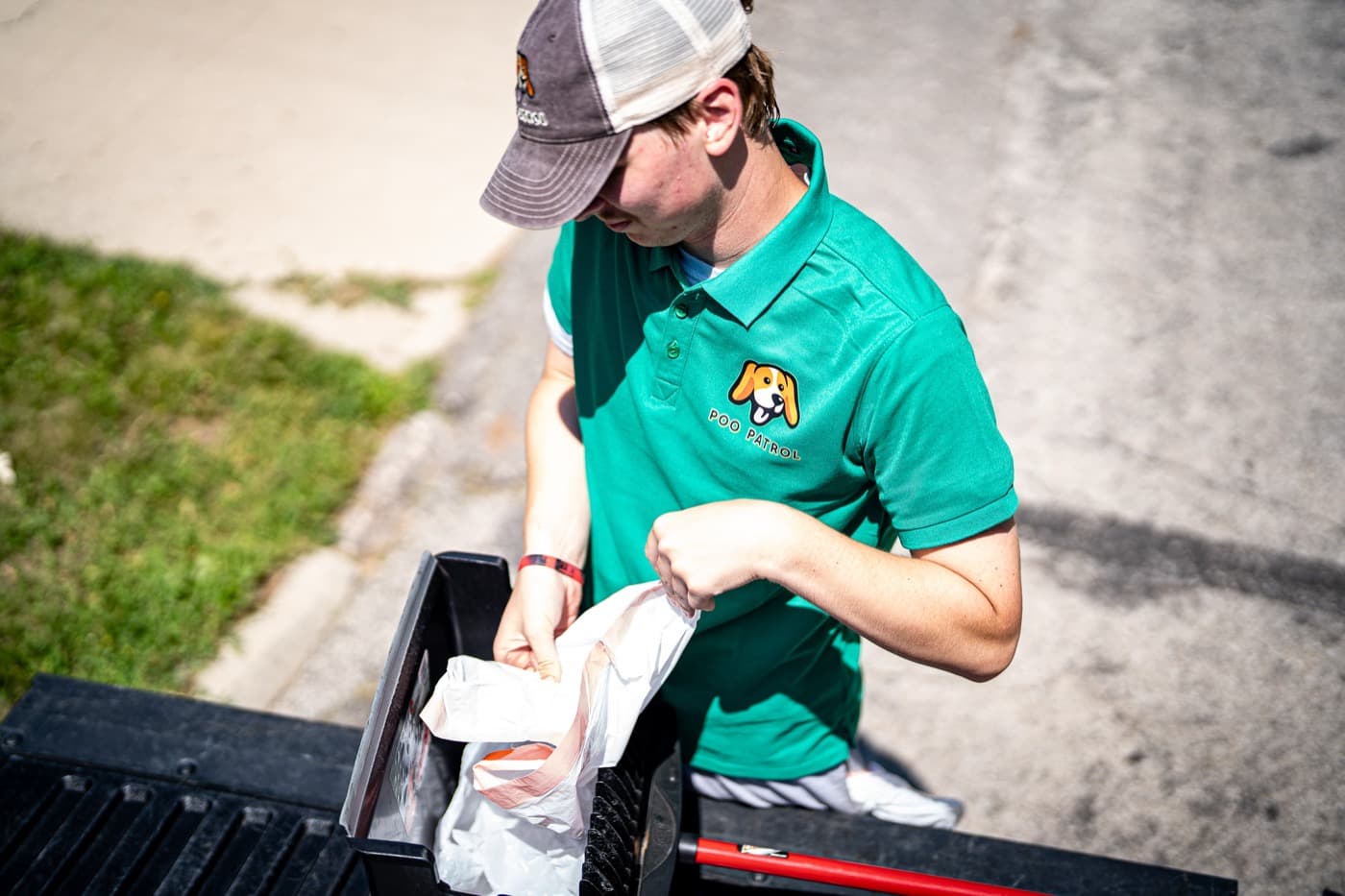
Our whole service is basically this blog post turned into a route: uniformed techs walking your yard in a grid every week, removing every pile before it becomes a soil problem, with tools and boots cleaned between yards so nothing travels from someone else's lawn to yours. Parents across Cedar Rapids, Iowa City, and the Des Moines metro use us as the layer of the system that never gets busy, never forgets, and never has a soccer tournament.
FAQ
How long does dog poop stay dangerous in a yard?
Longer than the pile itself lasts. Roundworm eggs can persist in soil for months to years after the visible waste is gone, which is why prevention (fast removal) beats cleanup after the fact.
My kid touched dog poop. Should I panic?
No. Wash their hands thoroughly with soap and water and move on. Risk comes mostly from repeated exposure to contaminated soil and hand-to-mouth habits, not a single yuck moment. Mention it to your pediatrician if your child later has unusual symptoms like persistent stomach trouble.
Is a weekly cleaning really enough to protect kids?
Weekly removal keeps waste from sitting long enough for the riskiest parasites to reach their infective stage in soil, and it is the standard we recommend for family yards. Households with several dogs or heavy yard use sometimes step up to twice a week.
A yard that's safe for bare feet
That is the standard, and it is very reachable. Get your free quote in about a minute, or call or text (319) 420-7667, and let the kids have the yard back.
Sick of scooping? We can help.
Get your free pooper scooper quote →